
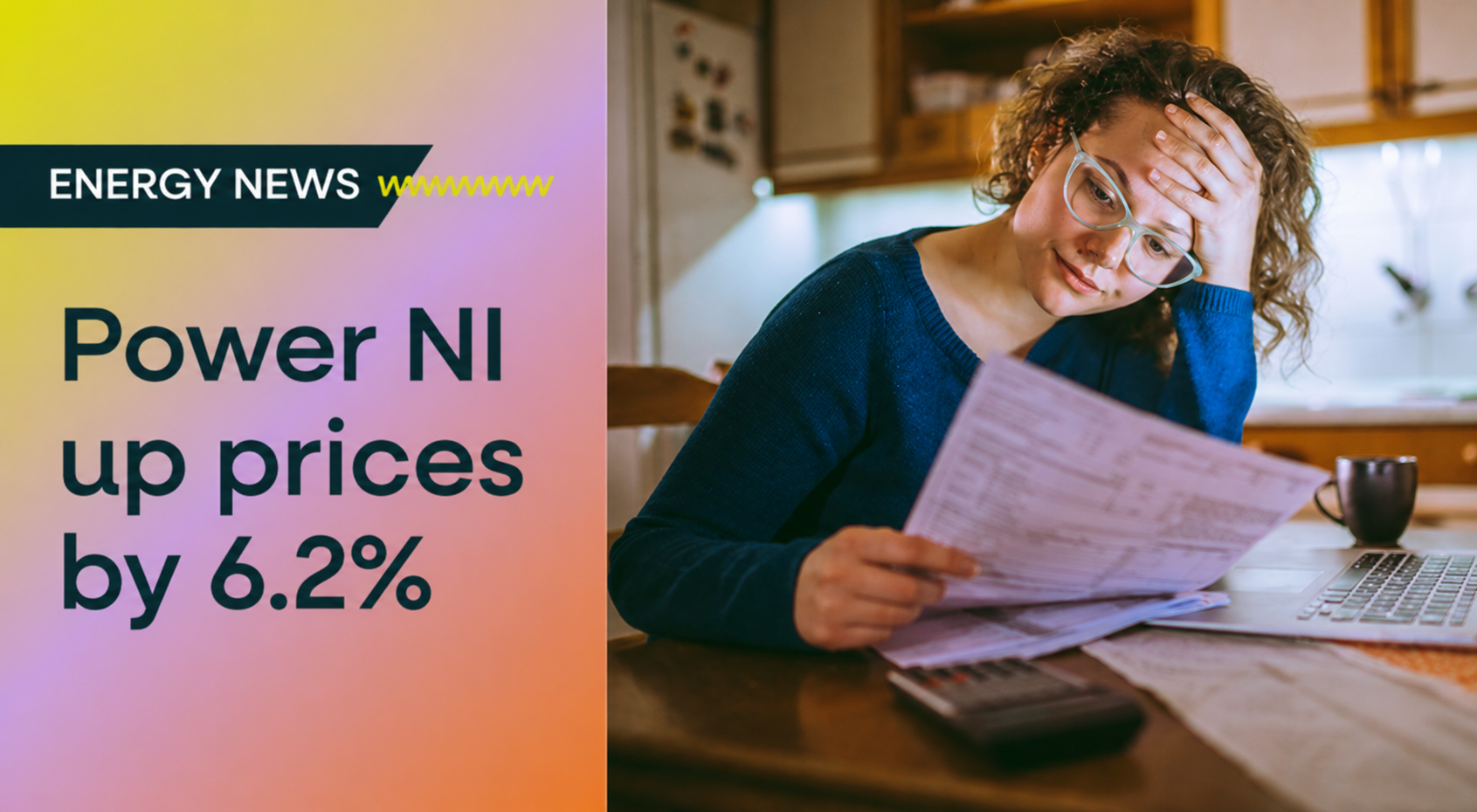
Power NI, who supply electricity to 6 in 10 homes in Northern Ireland, have announced a 6.2% price increase for domestic customers from 1st July 2026.
Around 521,000 Power NI customers will now see their bills increase. See below to find out more about how this price increase will impact on bills.
What does the price increase mean for customers?
As a result of this price increase, a typical* Power NI customer with a credit (bill pay) meter will see bills rise by around £64 per year, while keypad (PAYG) customers will see a yearly increase of £62, taking effect from July 1st 2026.
The increase will mean that the annual electricity bill for a credit customer will cost £1,092 and £1,065 for a keypad customer.
Power NI prices have been up and down over the last while. In April 2024 they reduced tariffs by 6.3% but this has been offset by a 4% increase on 1st December 2024, followed by a further 4% increase on 1st October 2024. So in the last two years Power NI prices have increased by around £140.
With this being Power NI’s third tariff increase within the last two years means that energy bills remain high, and well above the £1,000 level again which will be a concern for many households.
For context, in April 2021, the average annual bill was around £570, highlighting how far we still are from returning to historical cost levels – or that today’s prices might be the new normal.
What have Power NI said about the increase?
Power NI stated that the 6.2% increase is due to higher global costs and network-related charges, which will result in customers paying an average of £5 more per month.
William Steele, Director of Power NI Customer Solutions, said:
“This tariff adjustment is not a decision we’ve taken lightly. We have worked hard to hold prices for as long as possible, but sustained increases in global gas costs, along with higher network and market related charges, means unfortunately this increase is unavoidable.”
“We know this is unwelcome, however, we’ve delayed the change as long as we could, while keeping our tariffs competitive locally and below the average in GB and the Republic of Ireland.”
How are Power NI tariffs determined?
Whilst all suppliers compete for your business, Power NI as the largest supplier (supplying around 6 in 10 homes) is ‘price’ regulated. This means their prices are reviewed and approved by the Utility Regulator on a regular basis to ensure they reflect actual costs.
The Energy Price Cap does not apply to NI (only to England, Scotland and Wales).
How do Power NI prices compare to other suppliers?
Other suppliers may react to these new prices – and it may be the case the new offers, discounts or other incentives are introduced.
Many people remain with Power NI as they are the incumbent supplier – but this does not mean they are cheapest or provide the best deal for you. If you have never switched or it’s been a while then you will save money by switching.
Switching to a better deal
If you’re a Power NI customer, you may be thinking about shopping around before the price rise.
At Power to Switch, we compare every tariff and deal from all electricity suppliers to help you save money. Switching is fast, hassle-free, and puts more money back in your pocket – no need to even notify your old supplier!
So far this year, Northern Ireland consumers who switched through powertoswitch.co.uk have saved over £2 million, and, on average, Power to Switch customers save £421 from their annual bills.
Compare your deal today with us.
* typical customer is based on an average household usage of 3,200 units (kWh) per year.
** Power NI price increase is reflected in results displayed on Power to Switch.